
Introduction
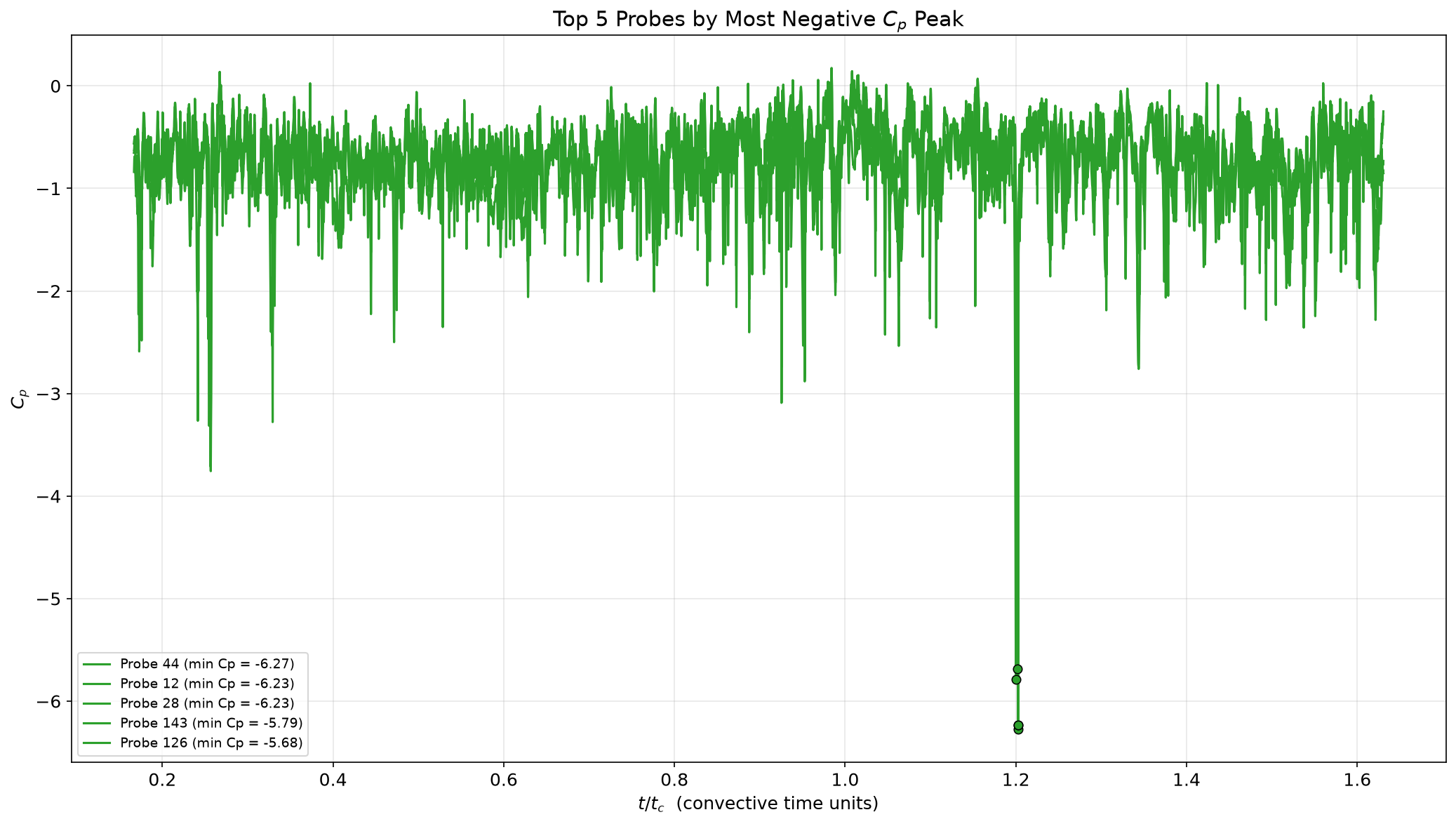
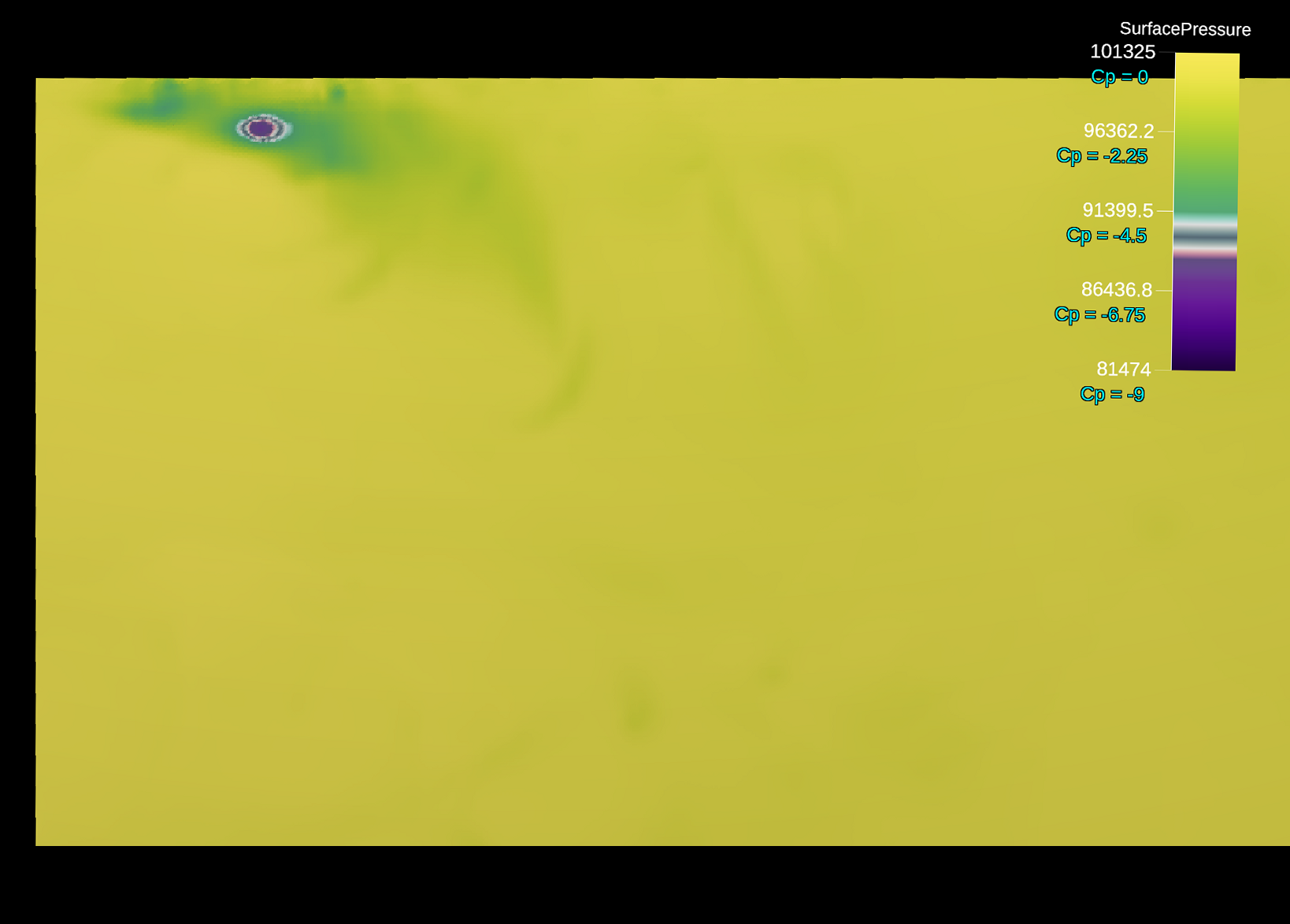
This case reproduces a wind tunnel test carried out at the Politecnico di Milano (PoliMi), where a high-rise building model exhibited localised suction peaks near its leeward top corner that were far more severe than the mean surface pressure distribution would suggest. These short, spatially compact pressure bursts are a demanding test for any CFD method attempting to predict peak cladding and structural loads.
Inflow Turbulence Validation
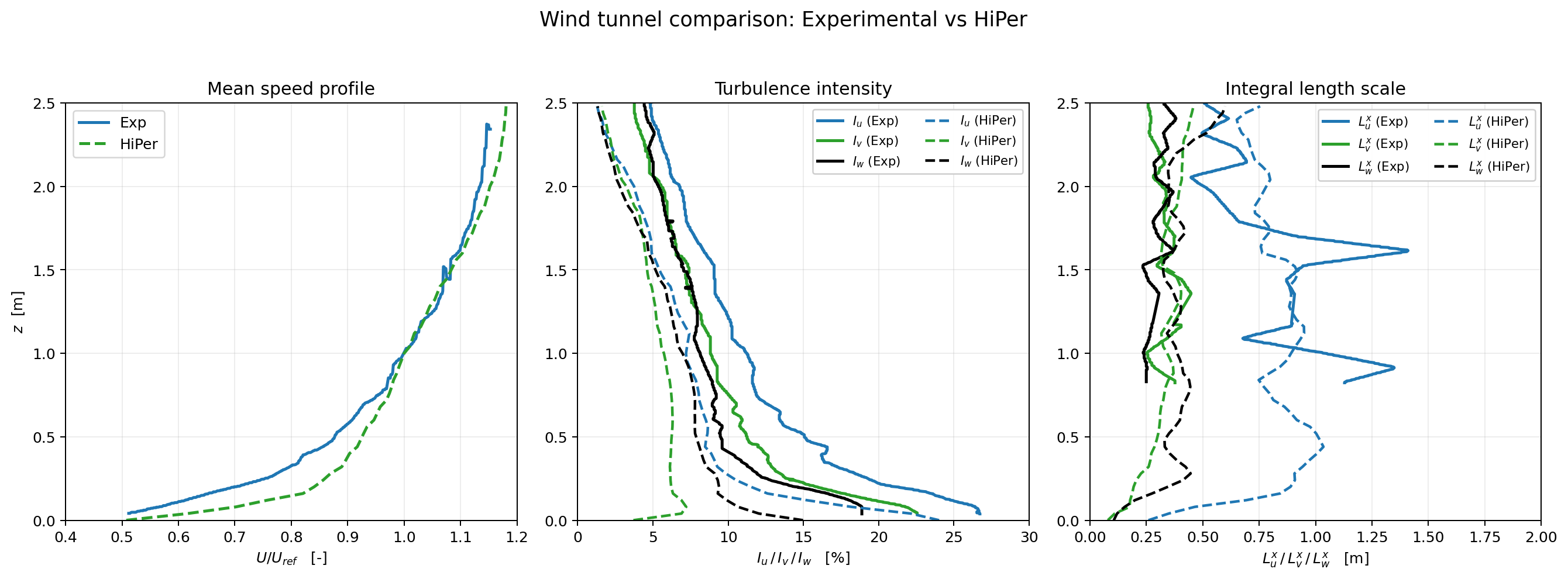
An empty working section, with the same turbulence generators set up as in the experiment, was run to check whether the inflow profile was comparable at the building location. The agreement confirms the boundary layer is captured well.
Pressure Coefficient Time Histories
A rake of probe points was placed in the simulation to match the PoliMi pressure taps on tile A, the instrumented panel on the rear leeward face of the building. HiPer picked up these micro-burst peaks in the Cp time history, shown below for the five probes recording the most negative pressure peaks, alongside the instantaneous surface pressure across the tile during one of these events.
Flow Visualisation
Computational Performance
0.5B
Mesh Cells
2×
NVIDIA RTX 5090 GPUs
36 min
Per Convective Time Unit
Bring HiPer Onboard
Interested in learning what HiPer CFD can do for your organisation. Contact us for more information or to arrange a demo.